The 3.5mm headphone jack features a 5.1-channel high-fidelity structure design for various audio channels, offering multiple functional usage options. Installation forms include DIP and SMT. The contact terminals adopt an elastic structure design to ensure good and stable contact and a long service life.
The 3.5mm headphone jack is used in various digital voice information terminals such as mobile phone 3D design, CD players, cordless phones, MP3 players, learning machines, DVD players, and digital cameras. Specification description: Welding temperature 260±5℃ for 10 seconds, insertion and extraction force 3 to 20N, lifespan 5,000 times. For a 3.5mm headphone socket made of a certain material, it is generally referred to how high the current density it can withstand, rather than how high the current intensity. Because wires of different thicknesses can withstand it.
1、 3.5mm headphone socket voltage measurement method
The first thing to confirm is whether the voltage of the power pins of each chip is normal. Secondly, check whether various reference voltages are normal. In addition, check whether the working voltage of each point is normal. For example, when a typical silicon transistor conducts, the BE junction voltage is around 0.7V, while the CE junction voltage is around 0.3V or less. If the BE junction voltage of a transistor is greater than 0.7V (except for special transistors such as Darlington transistors), it may be due to the open circuit signal injection method at the BE junction. Add the signal source to the input terminal, and then measure the waveform of each point in sequence to see if it is normal, in order to find the fault point. Sometimes we also use simpler methods, such as holding a pair of tweezers and touching the input terminals of each level to see if the output terminals respond. This is commonly used in amplification circuits such as audio and video.
The thicker the wire, the greater the current intensity it can withstand. But the current density is different, regardless of the thickness of the wire, the difference in current density it can withstand is not significant. The current intensity is only related to the size of the current and the cross-sectional area of the wire. For example, if the current is 10 amperes, regardless of how thick the wire is, the current intensity will be 10 amperes. For example, there is a current of 10 amperes through a wire with an area diameter of 1 square millimeter and a current of 10 amperes through a wire with an area diameter of 10 square millimeters. Their current intensity is the same, both are 10 amperes, but the current density is different. Of course, the current density is higher in a wire with an area diameter of 1 square millimeter. In this way, once there is a problem with the current transformer, both the circuit breaker and the lightning arrester cannot cut off the fault, and the higher-level circuit breaker will trip to cut off the fault, thereby expanding the power outage range. At the same time, the current transformer will also burn out due to delayed fault cutting.
2、 3.5mm headphone socket inspection control
1. The quality department QA conducts random inspections on the products sent to the production process, and the acceptance standard C=0 sampling plan
2. Provide annual training on inspection standards for inspectors, and issue a work permit upon passing the examination
3. Internal inspection sampling: During the inspection process, the team leader conducts random inspections of the work results of each inspection position at specified time intervals, and provides on-site correction and guidance
4. Goal management: Set missed inspection targets for inspection positions and establish overall target assessment methods for workshops; Review and monthly summary. The increase and decrease in missed detection rates must be summarized
When a single-phase grounding occurs on the user side, the circuit breaker does not trip, and in order to find the grounding point, it is necessary to pull the offline branches of the common line one by one, which will also cause the common line to be stopped and increase the power outage range. The tactile switch is mainly assembled by processing the following components through corresponding processes:
1. Plastic handle (material: usually POM material, if there are requirements for fire resistance, flame retardancy, and high temperature resistance, PA nylon material is often used for processing: injection molding)
2. Insulation base plate (material: electric wood board; processing technology: stamping forming)
3. Terminal (material: generally phosphor copper; processing technology: silver electroplating)
4. Iron shell (material: usually iron; treatment process: treated by electroplating nickel or blackening process to prevent oxidation)

 Product Center
 English
 Chinese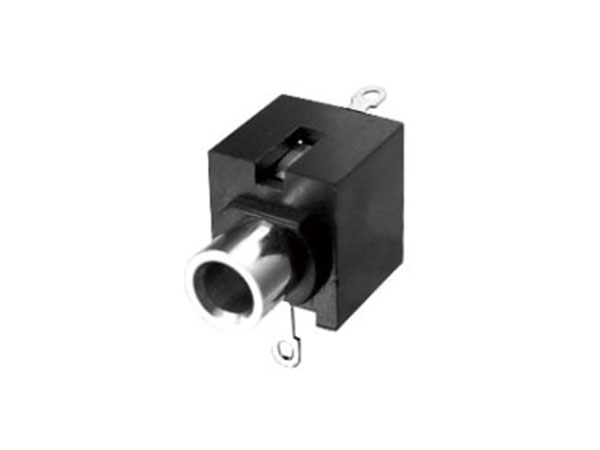
![[WeChat Consultation]](http://memberpic.114my.cn/dghengyi/uploadfile/image/20200527/20200527100150_1886714332.png)